
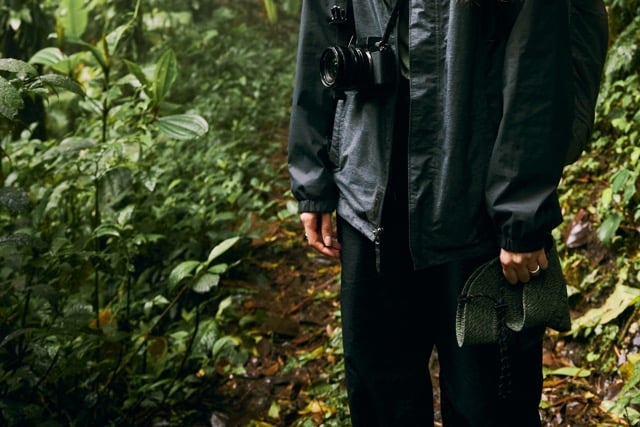
The rainy season in Costa Rica is one of our favorite times of the year. The country goes from dusty and brown to impossibly green, the rivers come back to life, and the afternoon storms are a kind of theater you do not get tired of watching.
But it is also the time of year when newcomers get caught off guard. Power blips during a video call. Water pools up next to a foundation. A road that was fine in March is suddenly closed by a landslide. Mold takes over the back of a closet. None of this is a reason not to live here. It is just a reason to prepare.
This is the practical guide we wish someone had handed us before our first wet season. Power, water, humidity, driving, health, and the mindset that ties it all together.
When Is the Rainy Season in Costa Rica?
Generally speaking, the rainy season runs from May through December, with September and October as the most intense months. Locals call this season invierno (winter) and the dry season verano (summer), which is confusing if you are coming from the Northern Hemisphere, but you get used to it.
A typical rainy season day in May, June, July or August looks like this: sunny in the morning, two o’clock the rain starts almost on a schedule, an hour or two of intense downpour, then it stops and you go about your day. As you move deeper into the season, the rain stretches longer into the day and starts earlier in the afternoon.
There is also a small dry break in July called veranillo, the little summer. The country is already lush and green, but the rain backs off for a couple of weeks. It is one of the best windows of the year to be here.
Where It Rains the Most
Rainfall in Costa Rica varies dramatically by region. A short summary:
- Guanacaste is the driest part of the country. The wet season is real, but milder. Tamarindo, Playas del Coco, and the Papagayo Peninsula see noticeably less rain than the rest of the country.
- Central Pacific and Southern Pacific can get very rainy. Manuel Antonio, Dominical, and Uvita are among the wettest zones in the country.
- Central Valley and San Jose get a decent amount of rain, but with the classic afternoon pattern.
- Caribbean plays by completely different rules. It is basically always a chance of rain there, and the dry-wet cycle does not line up with the rest of the country.
- Northern zones like La Fortuna see rain almost year-round because of the unique microclimates around the volcano.
If you have not visited yet, this is one of those things that gets washed away in the average internet write-up. A blanket statement like “Costa Rica’s rainy season runs May to November” hides the fact that two towns 90 minutes apart can have completely different patterns.
What About Hurricanes?
Hurricanes and tropical storms are real, but they almost never hit Costa Rica head-on. Because of where the country sits geographically, most hurricanes track north of us. What we do get is the outer bands: heavy sustained rain, gusty winds, and the cascading effects on infrastructure. You will not get the eyewall, but you will get a lot of water.
Power and Internet: How to Stay Online
For anyone working remotely from Costa Rica, this is the question that comes up first: how do I stay online?
The honest answer is that outages happen, and the farther you are from the Central Valley, the more they tend to last. In the city, most outages are blips. The lights flicker, things reboot, and you carry on. At the beach you might be down for two hours. In jungle or mountain communities, a single tree on a fiber line can knock you out for half a day.
Here is the layered approach that works for us:
Layer 1: UPS battery backup on essentials. A simple UPS for your modem, router, and computer covers maybe 90 percent of outages. When the power blips during a video call, the lights go off in the background and you just keep talking. Most home-office UPS units will run your essentials for around an hour.
Layer 2: Solar batteries (optional but powerful). If you own your home and plan to be here long-term, partial-house solar with battery storage is increasingly common. You do not need to power the whole house. The refrigerator, internet equipment, security system, washer-dryer, and a few lights is enough to make outages a non-event. Patrick has gone 36 hours without grid power and barely noticed.
Layer 3: Starlink as redundancy. A lot of us run Starlink as a backup, not a primary. Where we live in jungly or tree-covered areas, you cannot always get the clear 360-degree sky view Starlink prefers, but as a backup it is vastly better than nothing. Starlink Mini on a $5-per-month pause plan that you activate only when you need it is a clever middle ground.
Layer 4: Cellular as the final fallback. Cell coverage from Claro and Kolbi is genuinely strong across most of the country, with 5G in more places every year. The cell towers have their own backup power, so they tend to stay up when the grid is down. If you can tether your laptop to your phone and finish a call, that is often the difference between a missed meeting and a no-big-deal day.
The point is not to have all four layers. The point is to think through the chain of failures and decide where your tolerance ends.
Water, Drainage, and Flooding
This is where a lot of people lose money in the wet season, and it is almost always avoidable. The big rules:
Prep Your Gutters, Drains, and Roof Before May
Most of the home damage we see during rainy season comes from water getting under or into the roof line, where you cannot see it until it has already done its work. Coming out of the dry season, gutters and downspouts will be full of leaves and debris. Clean them. Inspect the roof. Reseal anything that looks tired. Trim any tree branches that could become projectiles in a storm.
This is the time of year when handymen and professionals are booked solid. Schedule the work in March or April, not when the first real downpour reveals a problem.
Watch Out for Standing Water
Standing water is bug-breeding central. Mosquitoes lay eggs in anything that holds water for a few days: an old planter, a forgotten bucket, a clogged drain, a tire. Mosquitoes can mean dengue, and Costa Rica is a dengue country. Walking your property weekly and dumping anything holding still water is one of the simplest, highest-impact things you can do.
Respect the Rivers
A stream that looks adorable in March can become genuinely dangerous in October. Flash flooding is the most common rainy season problem, and it shows up in places you would not expect, including parts of San Jose and Escazu. When you are evaluating a house, or thinking about buying versus renting, pay attention to where the property sits relative to streams, drainage paths, and the slope of the land. Above the stream or below it? Where does the water go in a deluge?
This is one of the common mistakes people make moving to Costa Rica: they fall in love with a property in dry season without understanding what it looks like in October.
Stock Up and Schedule Maintenance Early
The chances of being stranded in your home for days are very low. But it is worth keeping a basic pantry, propane, pet food, and any essentials topped up. A phrase that captures the whole idea: work the calendar, not the crisis. Roof inspections, sealing concrete, tree trimming, painting. All of it before May.
Humidity and Your Home
Baseline humidity in Costa Rica is high. It is a tropical country. The wet season cranks that even higher, and the consequences show up in places you would not expect.
- Mold finds its way into closets, on the back of furniture, on leather, on framed artwork, in any cabinet that does not breathe.
- Electronics corrode faster.
- Paper, books, and documents warp.
- Laundry dried outside can mildew before it dries.
The fixes are simple, but you have to do them:
- Dehumidifiers in any closed room, especially closets. Expect your electric bill to go up.
- Airtight bags with silica packets for clothing, documents, and anything sentimental.
- Skip bringing certain materials when shipping to Costa Rica. Some items just do not survive the climate. Patrick brought down a beautiful photograph from his sister, framed in glass, and it ended up covered in mold. There was nothing to do.
If you are still thinking about the move, this is one of those quiet realities that a good scouting trip helps you internalize. You can read about humidity, but you really only get it when you have stayed in a Costa Rican home for a few weeks in October.
Driving in the Rainy Season
If you are new to the country, our honest advice is to avoid driving when you know it is going to rain hard. And once you have been here a few months, you will know.
A few rules we live by:
Schedule the day in the morning. Run errands, get to appointments, and try to be home or near home by mid-afternoon. The pattern is predictable enough that you can build your day around it.
Dark plus storm is a different category of dangerous. It can effectively get dark by 3 or 4 in the afternoon during a real storm, even though sunset is around 5:36. Visibility goes to almost nothing. If you can avoid driving in that combination, do.
Plan for closed roads. Landslides are real. Some routes will close for a day, sometimes longer. The roads connecting the Central Valley to the Central Pacific beaches and the route south to Jaco see landslides regularly during peak rainy season.
Never cross standing water in your car. Unless you really, genuinely know what you are doing and you have watched another car make it safely, do not drive into water across the road. Things change drastically and quickly.
4WD is not always necessary, but it is sometimes worth it. If you live in the city you may never need it. If you are exploring, hauling things to the beach, or going up and down mountain dirt roads, buying a 4WD car is the smart move.
A couple of small habits that local drivers have built up around the weather:
- Use your hazards. Ticos are excellent at this. If traffic ahead is slowing or there is a visibility problem, hazards go on to warn the car behind. Pick up the habit. You will need it.
- Use Waze. It is the most up-to-date source for landslides, road closures, and traffic problems in Costa Rica. The community keeps it current in a way Google Maps does not.
If you are still researching driving in Costa Rica, the rainy season is the chapter that deserves the most attention.
Health and Safety During the Wet Season
Rainy season changes what is happening with bugs, animals, and your own body. The big ones:
Dengue
Dengue is a mosquito-borne illness, and Costa Rica is a dengue country. Everyone we know who has had it describes it the same way: high fever, brutal headaches, joint and muscle pain, sometimes a rash. People genuinely say it feels like wanting to die for a week.
There is now a dengue vaccine, but it is not available in Costa Rica yet. It exists in Japan, the UK, and a handful of other countries. Until that changes, prevention is the only real strategy: bug spray, screens on every window, no standing water on your property, and being smart at dusk when mosquitoes are most active.
If you do get dengue, you cannot retroactively vaccinate against it. The treatment is hydration and rest. That is it. The local healthcare system handles it routinely, but it is something to take seriously.
Cane Toads and Pets
Cane toads are the single biggest danger to dogs and cats during the rainy season. The toxin they secrete is enough to kill a dog that licks one, and unfortunately many dogs will do exactly that. If you are moving pets to Costa Rica, this is one of the realities you need to plan around: keep your yard clear, walk the grass before letting the dog out, and know the nearest emergency vet.
Bugs and Other Creatures
Pretty much everything that lives in or around your house gets more active in the wet season. Ants, mosquitoes, scorpions, spiders, the occasional snake. They are all looking for somewhere drier to ride out the rain, and your home is a candidate.
The prep is straightforward: seal gaps low to the ground, keep screens closed, and consider a perimeter treatment around the house before the season starts.
Mold and Hydration
Mold triggers sinus and respiratory issues for a lot of people who never had them before. Watch for it. One of us once found a literal mushroom growing out of a baseboard in a San Jose apartment, with black mold throughout. If you are renting, check for it before you sign, and ventilate aggressively.
Even though water is everywhere, dehydration still gets you. It is warm. Drink real water, not just ambient humidity.
The Mindset That Ties It All Together
If we had to summarize everything in this article in one sentence, it would be this: the right mindset turns the rainy season from a problem into a rhythm.
Once you get used to it, the wet season becomes second nature. You stock the pantry in April. You put the UPS on the desk. You run a dehumidifier in the closet. You check the roof. You make peace with the fact that you cannot drive at 3pm on a stormy October Thursday, so you do not.
This is also the time of year when community matters most. The WhatsApp group for your building or neighborhood becomes genuinely useful. People look out for each other — checking in when someone is without power, helping with a downed tree, sharing where the road is open. If you have just arrived, the rainy season is one of the best excuses to actually get to know your neighbors. Lean on them. They will lean on you.
If you are still in the planning stage of your move, this is the kind of stuff we walk through with families on every discovery call. It is not the highlight reel, but it is the part of life here that decides whether you stick.
Frequently Asked Questions
When is the rainy season in Costa Rica?
Generally May through December, with September and October as the most intense months. Locals call it invierno (winter). Most rainy season days are sunny in the morning and stormy in the afternoon, though the rain stretches longer into the day as the season progresses. There is typically a small dry break in July called veranillo.
Do I need a backup generator or Starlink for the rainy season?
Most homes do not need a generator, but everyone benefits from a UPS battery backup on their internet equipment and computer. If you work online, layered redundancy is worth the investment: UPS for blips, solar batteries or a small generator for longer outages, and Starlink or a cellular plan as a fallback. The farther you live from the Central Valley, the more important the backup layers become.
Is it safe to drive in Costa Rica during the rainy season?
Yes, with caution. Avoid driving during heavy afternoon storms, especially after dark when visibility drops dramatically. Watch for landslides on mountain and coastal routes, never cross standing water in your car, and use Waze for real-time updates. Many driving in Costa Rica realities are amplified in the wet season, so plan your day around morning windows when you can.
What health risks come with the rainy season in Costa Rica?
Dengue is the most serious risk because mosquito populations explode in wet weather. Standing water in or around your home is the main culprit, so eliminate it. Mold and humidity can trigger sinus and respiratory issues. Cane toads are a major danger to pets. Bug spray, sealed windows, dehumidifiers, and yard awareness handle most of it.
Does the rainy season mean it rains all day, every day?
No. Especially in the early months (May through August), most days follow a predictable pattern: sunny mornings, an intense afternoon storm starting around 2pm, then dry again. September and October are the exceptions, when storms can stretch through most of the day. Regional differences are also large. Guanacaste stays much drier than the southern Pacific or the Caribbean coast.